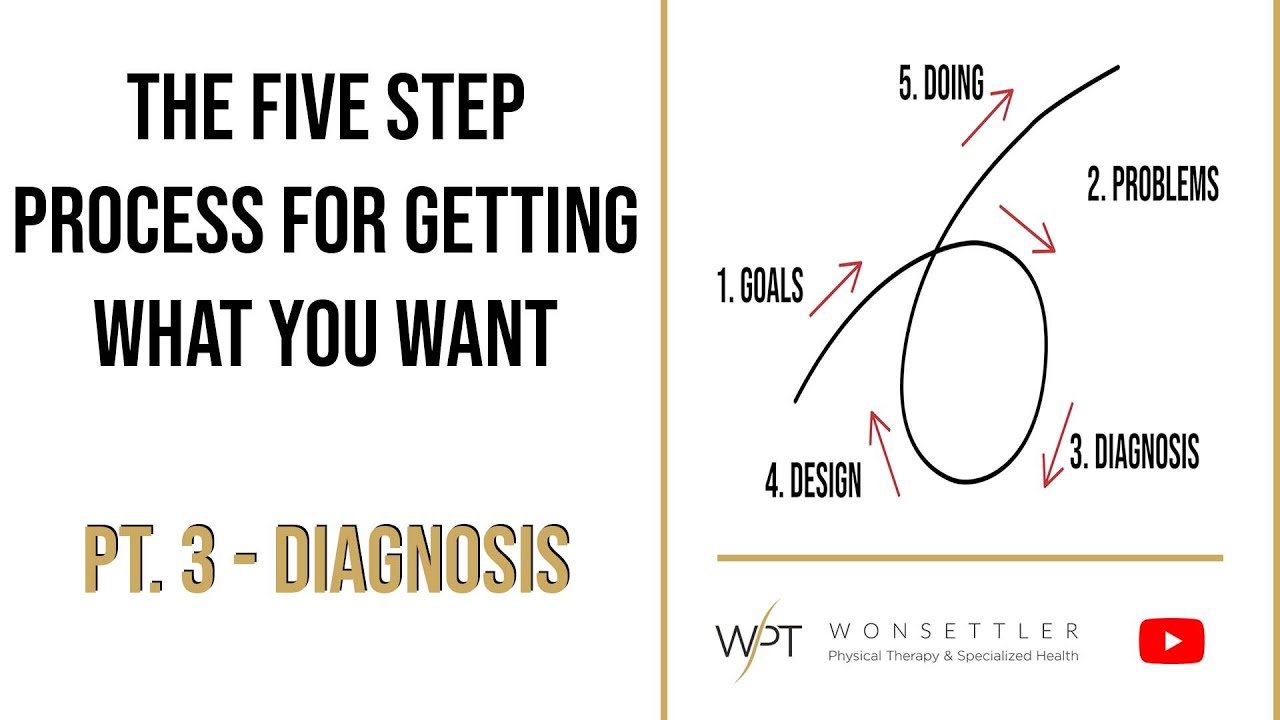
Diagnose Properly to Get at the Root Causes

When you’re on the trajectory of working toward your goals, you’ll invariably come across problems that stand in the way of your getting what you want (this assumes your goals are appropriately audacious – if you’re not stretching yourself you very well may not “fail”).

First focus on “what is” before deciding “what to do about it”. After you encounter a problem, you will come across a common trap that can typically befall us humans – wanting to quickly move to a solution, rather than sitting with the problem and accurately diagnosing the root of the issue. This can be a big problem, because if you move quickly to a solution, you’re much more likely to keep bumping up against the same issue down the road.

Here’s the beauty of diagnosing well – you get to learn about what you and other people are like, that way you can know what to expect. The tough part about this is it can be very uncomfortable. We as humans don’t like to sit with all of our weaknesses and inadequacies, and we also do not like pointing out those things in other people. Part of the time it’s because we’re blind to our weaknesses, but it’s much more likely our egos get in the way.

According to Ray Dalio “More than anything else, what differentiates people who live up to their potential from those who don’t is their willingness to look at themselves and others objectively and understand the root causes standing in their way”.

Our next blog will focus on how to Design a Plan to overcome your problems and keep on ascending toward bigger and better goals!

Migraines 101

Have you had a migraine? Have you had a migraine with aura, like the one in the picture?

Watch this video to learn about headaches and migraines, so you can understand more deeply what’s going on and what you can do to positively influence them when they arise. Headaches and migraine are very common ailments, but not a lot of people are fully informed about them. So what is a headache? A headache is classified as any pain in the face, head or upper neck area.

The World Health Organization estimates 50-75% of adults 18-65 years old have had a headache in the past year and a headache that lasts 15 or more days every month affects 1.7-4% of the world’s population. 30% of these headaches are reported as migraines and migraines are the 5th most common cause for disability in adults under 50.

First let’s talk about the differences in various types of headaches.

Primary VS Secondary Headache

Primary Headache


  • Headaches that have no underlying cause


  • Migraines


  • Tension-Type Headache (TTH)


  • Trigeminal Autonomic Encephalalgia


  • Other primary HA


Secondary Headache


  • Result of another condition causing traction on or inflammation of pain-sensitive structures


  • Medication Overuse Headache (most common)


Migraines


  • Chronic and episodic neurovascular pain syndrome


  • Altered nervous system processing


  • Clinical picture is four phases:


  • Prodrome – This is when you have the sense that a migraine is coming


  • Aura – Altered visual field while experiencing a migraine


  • Headache Phase


  • Postdrome – This is the last stage of a migraine, often called a “migraine hangover”


  • Symptoms last 4-72 hours on average


  • Second most common primary HA


Migraine WITH Aura


  • This is a spreading of pain across the brain


  • Aura consists of fully reversible symptoms that precede or accompany HA


  • Commonly described as changes in visual field


  • Visual images fade typically as the HA begins


  • HA is intense, throbbing and usually on the opposite side of the visual field changes


Migraine WITHOUT Aura


  • Most common type of migraine seen in clinical practice


  • Usually unilateral and periorbital


  • Vomiting may occasionally terminate the headache


  • Various combinations of symptoms:


  • Fatigue


  • Difficulty concentrating


  • Neck stiffness


  • Blurred vision


  • Yawning


  • Pallor – Fading in color


Headaches are REMARKABLY complex and can be REMARKABLY debilitating. It can be very frustrating trying to discover what can be done to help ease your headaches. In the following video we are going to focus on things you can do proactively to decrease the frequency and intensity of your headaches.

Please feel free to reach out to us if you struggle with headaches and/or migraines, to find out how we can be a resource to you.

Identify Your Hurdles!

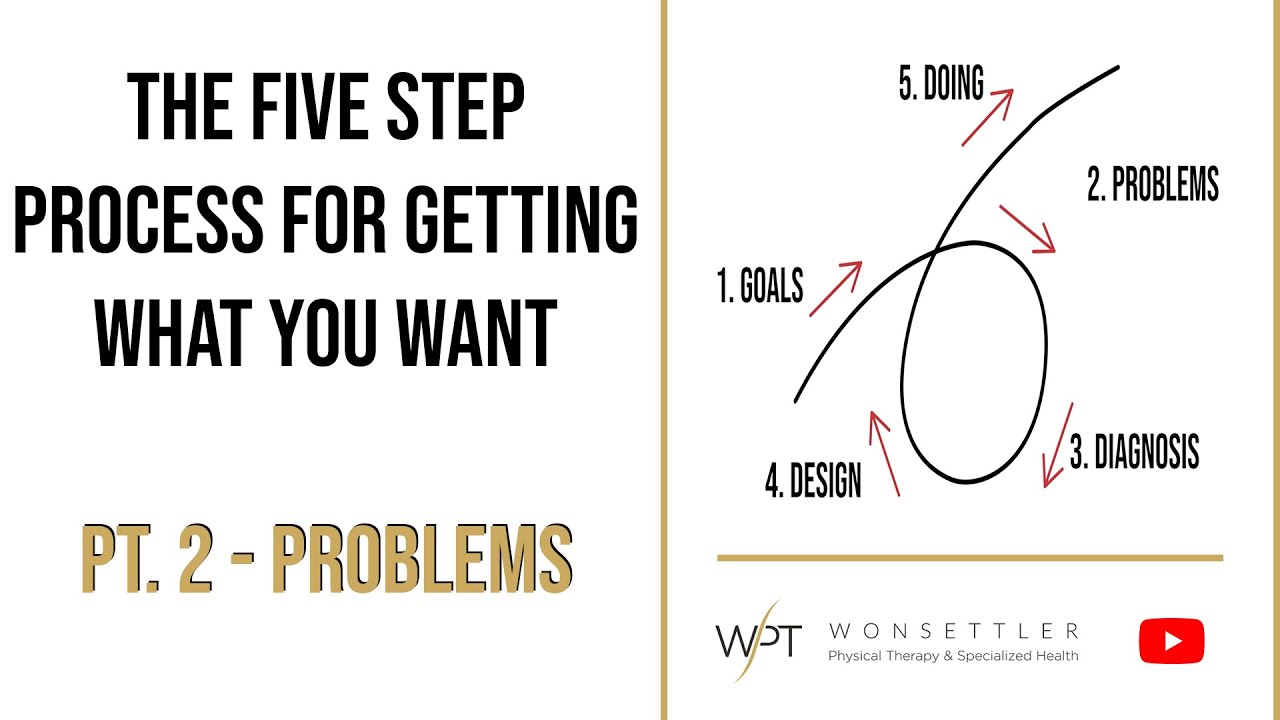
The second step of Ray Dalio’s 5 step process for getting what you want is identify and don’t tolerate the problems that stand in the way of your achieving those goals.

It can’t be said enough – this is REALLY hard! Being able to identify our own weaknesses and bring them to the surface. Weaknesses are not pleasant. They highlight areas within us that are uncomfortable at best, and at times can be downright painful.

But I think the most successful people see their weaknesses differently than the rest of us. They don’t respond with pain. They appreciate when they uncover a weakness that’s getting in the way of their goals, because it’s a necessary step. They change the paradigm, and therefore remove the pain that can get in the way of their progress. When the pain of our own weaknesses are removed, we’re more likely to confront them and design ways around them.

I also think it’s worthwhile to not jump ahead. Though this can sometimes be less fun, we should really not rush this step. You, like me, have more than one weakness, and more than one problem. If you rush too quickly, you may miss something that’s a bigger barrier than the first thing you’ve discovered. Take your time!

In our next blog we will be talking about the importance of accurately diagnosing problems to get at their root causes, stay tuned!

Overhead Athletes, This One is for You Pt. 2

In the last video we talked about the 4 most common adaptations that occur with overhead athletes. For a recap, here they are again. Excessive external rotation, decreased internal rotation, ER weakness and shoulder blade dysfunction. To see our last video, visit this link here

Today we’re going to give you a really abbreviated version of simple but very effective arm care routine you can perform if you play any overhead sport. These exercises are specifically designed to address the adaptations we’ve mentioned above.

Sleeper stretch: This stretch is to address limitations in internal rotation range of motion

External Rotation with a band: This exercise will help strengthen your shoulder in a way that is not likely getting strong in your training, unless you’re doing this or very similar exercise

W’s: This is a great exercise to improve the stability and function of your shoulder blade, which is really important for good shoulder mechanics.

Serratus push ups: Strengthening the Serratus Anterior muscle is really integral in providing shoulder stability for you overhead athletes.

Try these four exercises to assure you’re performing at your best, taking care of your shoulders, and staying away from physical therapists and orthopedic surgeons!

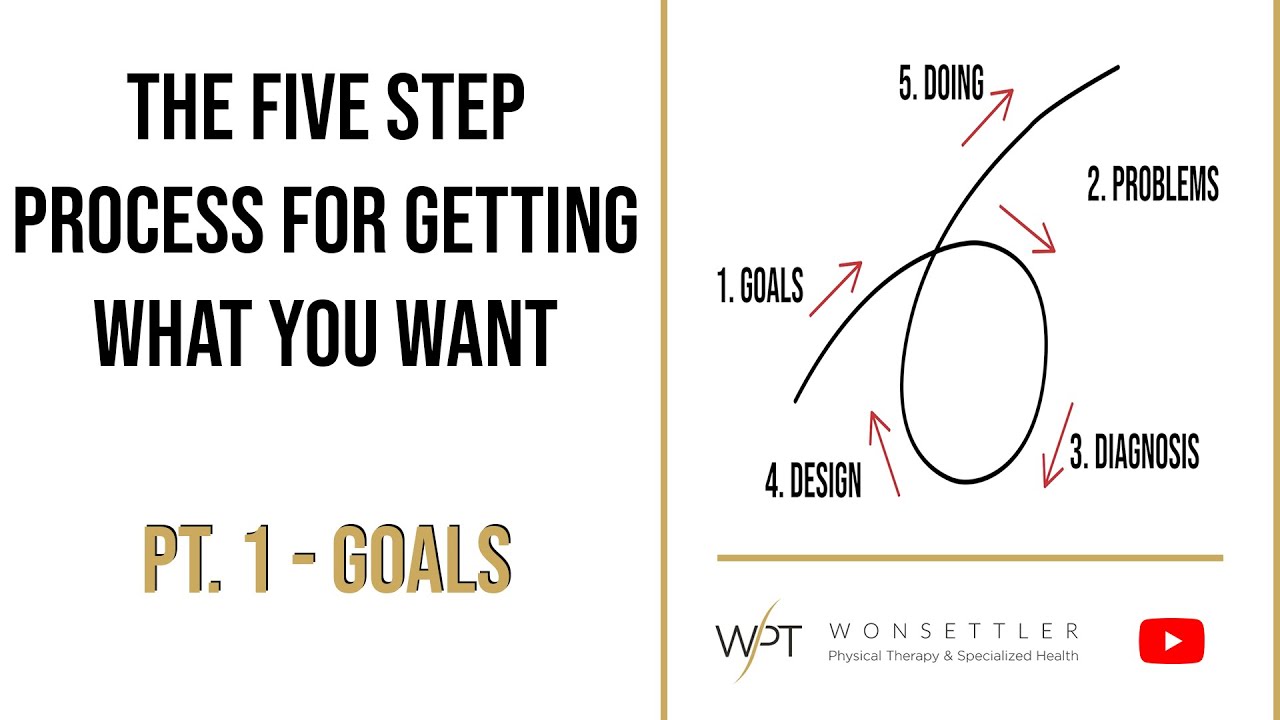
The 5 Step Process for Getting What You Want

1. Have clear goals.

2. Identify and don’t tolerate the problems that stand in the way of your achieving those goals.

3. Accurately diagnose the problems to get at their root causes.

4. Design plans that will get you around them.

5. Do what’s necessary to push these designs through to results.

Today we’re going to discuss step 1. HAVE CLEAR GOALS. I can’t tell you how many people I’ve spoken to over the last few years that have very little clarity around what they want. You may not know this, before someone becomes a patient at WPT, I (Cliff) personally speak with them to learn about the backstory around their issues, what their barriers to recovery are, and ask them what they’re specifically wanting to achieve with Physical Therapy. I’ve heard from so many folks that say something like “I just want to feel better. I want to have less pain.” This is a great start. Of course no one wants to be in pain, or be limited by a physical issue they have. BUT, it’s often what is happening downstream as a result of that pain or issue that really affects someone’s life and has them seeking help.

What’s the thing you’re after? Get CRYSTAL CLEAR so you know how to aim, and you can be sure you’ll either hit the target and aim for the next thing, or re-adjust the scope learn from your misses so you can try again!

Overhead Athletes, This One is for You

If you’ve ever played a sport that involves significant time spent in the overhead position (baseball, basketball, swimming, tennis, volleyball, lacrosse, etc) you probably know very well that the repetition in these positions can cause issues that can lead to injuries. The facts are that repeated overhead stress and force cause microscopic trauma to the muscles and tendons.

This isn’t a bad thing, necessarily. Some of the adaptations that occur from repeated overhead exposure lead to increases in performance, and that’s what every overhead athlete is after! However, it’s important to be aware of this, and know the typical changes that are seen over time, so that prevention is the focus – not rehab after a significant injury or surgery.

Here are some of the most common adaptations.


  • External rotation weakness: Think about it. All overhead sports about propelling things FORWARD – not backward. Resistance backward would improve external rotation strength, but this is simply not how overhead sports work. So you lose the strength in this particular group of muscles because they’re not being properly strengthened and conditioned – if you’re not taking the necessary precautions.


  • Excessive external rotation range of motion. This is a byproduct of trying to generate a lot of force forward. And it’s not just pitchers that develop this excessive range. Again, this by itself is not a problem, it’s an evolution. However, if left unchecked, it’ll cause some down range issues.


  • Decreased internal rotation. The total arc of our shoulder ROM doesn’t increase. Something’s gotta give. Often it’s a decrease in internal rotation.


  • Dysfunctional motion of our shoulder blade. This is often overlooked. In an upcoming video we’re going to get into the specifics of this. And we’re going to talk about what can be done to address it, so you stay in the game and perform at your absolute highest level.


Stay tuned on some really important, and basic, exercises you can do to keep yourself out of PT and away from the surgeon’s hands!

WPT Principles 5 | Evolution = Looping

I want to introduce you to one of my very favorite books I’ve ever read. I’ve read it at least 4 times, and I regularly revisit it for pearls of wisdom on how to operate, both individually and personally. Unsurprisingly, it’s called PRINCIPLES. It’s written by Ray Dalio, who is an investor and a super smart dude that has approached his personal and professional life really intentionally so he can maximize it for what he wants to achieve.

“Evolution consists of adaptations/inventions that provide spurts of benefits that decline in value. That painful decline leads either to new adaptations and new inventions that bring new products, organizations and human capabilities to new and higher levels of development, or decline and death.”

Dalio goes on to say that perfection doesn’t exist; it is a goal that fuels a never ending process of adaptation. If something, or someone, was perfect, they wouldn’t be evolving. But we know that companies, countries and individuals are highly imperfect but capable of improving. So rather than hiding our mistakes, we’re much better off to discover our imperfections and deal with them. When we can do this well, we learn the valuable lessons that come from the mistakes, and we improve. If we don’t, we don’t grow. “Evolve or die”, as they say.

In the coming videos in this series, I’m going to outline the specific 5 step process Ray Dalio prescribes in order to evolve well. Again, this looping trend applies to you as an individual (and it applies to your mental/emotional state, as well as your physical state) – heck, it applies to nearly everything. We hope you find this useful.

Evolve and struggle well!

– Clifton Wonsettler, DPT, CSCS

WPT Principles 4 Pt.2 | Thoughtful disagreement

We must agree to present our perspective without pulling any punches. We can’t hold back, fearful of what the other person will think or what they’ll say. We need to be honest, and we need to be assertive. BUT, we also must be open minded at the same time. We need to realize that our own perspective is, by itself, woefully short of the complete picture. We need to recognize that most often, the best path forward, the “truth,” lies between the two views.

Easy, right? Obviously, no! This is exceptionally challenging. We all have a need to be heard. To feel valued. To think we have the answers. Whether it’s an ego/humility/pride issue or an issue of wanting to avoid discomfort and potential pain, the path forward is really really difficult to walk.

Even if we’re on board for moving forward to a better operating system amongst our valued partners (spouses, co workers/bosses, extended family, etc) it’s another thing entirely to do it well. I’d like to outline a few things I’m trying to think about so I can do this better.

– Be prepared. Prior to the conversation, tell yourself “I’m going to question how I know I’m right?, not ‘I know I’m right’”

– Pay attention to your gut. If you have that feeling of anger or tension in your belly, pay attention and reset your mindset.

– Pay attention to your voice/tone. Are you talking fast, loud, or otherwise being a jerk? Stop!

– Breathe. Take some big belly breaths, and be thankful you have people in your life that you care about and care about you enough to have challenging conversations with.

– Pivot when necessary. Sometimes you need to totally shift the conversation, by either changing your approach or shifting your perspective. All with the aim of getting what you want – a better path forward!

– Shelf when necessary. There are times when the best thing to do is to put things on the shelf. There are times when proceeding forward right now will not be constructive. Don’t push it. But, agree to come back to it when you can both be more calm feel good about how to push through to results.

We hope you find these principles helpful in some way. It’s been helpful for us to navigate how we want to operate as individuals within a company, and identify what we stand for. We’d love to hear your thoughts! Let us know if this is great, it’s terrible, or how it can be better.

Thank you!

Low Back Pain in Females

Ladies, we are different. We are special. We’re strong, and we’re capable. And…we have specific attributes that are unique to us. These differences extend beyond the obvious anatomical and hormonal differences. Labor, menstruation, and menopause, just to name a few.

Some of the things that make us unique and special also can contribute to a potential for back pain. Let’s look at some of the causes of back pain and how they may be more likely for us as women.

Sacroiliac (SI) Joint Anatomy Differences:

SI joint dysfunction is a common cause of low back pain in men and women, but women are more commonly affected for many reasons. First off, the SI joint surface area is smaller most often compared to men, resulting in a higher concentration of stresses across the joint. The sacrum is also wider, more uneven, less curved, and more rotated in women, which may cause problems in the SI joint.

Hormone Changes in Pregnancy:

A common cause of low back and SI joint pain occurs with labor and delivery. When a woman gets pregnant, her body begins to produce increased amounts of progesterone and relaxin hormones which causes a greater extensibility and pliability of ligaments and joints causing hypermobility. This is a good thing because it allows for the pelvic musculature to accommodate the growing baby. However, ligaments and muscles provide stability. When laxity is increased, support is decreased leading to joint instability or muscle tightness causing pain and discomfort. Additionally, this hormonal shift is a common cause of coccydynia or “tail bone” pain.

Hormone Changes in Menopause:

As we age, degenerative changes will occur. Arthritis is a part of life for most all of us as we get older, but women have some specific issues they deal with, and can be at play with back pain. After menopause, estrogen production decreases, causing increased resorption of bone. This makes post-menopausal women more at risk of developing osteoporosis and osteopenia. These changes may cause nerve root compression causing radiating pain down the legs, numbness, tingling or burning sensation. These changes may also affect the curvature of your spine causing muscle shortening, increased joint stress and muscle deficiencies leading to pain.

Endometriosis:

Endometriosis is a condition where the tissue that normally lines the uterus begins to grow outside the uterus. This is a gynecological disorder that affects women exclusively. Symptoms may include painful menstruation cycle, pain in the genital region, or low back pain during menstruation. Low back pain may even become chronic with this condition due to the nature of recurring menstruation cycles.

Pelvic Floor Dysfunction:

Lastly, but certainly not least, pelvic floor dysfunction is a common link to low back pain.

If you are someone who is experiencing urine leakage when you cough, or feel you have to run to the bathroom right away or you’ll have an accident, you are experiencing a form of pelvic

floor dysfunction. Some examples of pelvic floor dysfunction include urinary incontinence, fecal incontinence, pelvic organ prolapse, dysuria (pain with urination), constipation, nocturia (frequent urination at night), dyspareunia (painful intercourse).

The pelvic floor muscles make up the bottom of our core. If we are not addressing dysfunction in this area, we are leaving out the foundation causing unequal force distribution and increased stress and load through our lumbar spine when we are performing functional activities.

So, what’s a lady to do?? First, MOVE! Regular exercise increases your muscle strength, improves your balance, decreases your risk of bone fracture, improves your posture and decreases your pain.

These issues are complicated, however, so if simple exercises aren’t helping you, you need a pro in your corner. At WPT, we get to the root of these issues with comprehensive diagnosis, and treat these problems to not only address your deficits but prevent them from recurring throughout your lifetime.

Stay strong, ladies!

– Tyra Abdalla, DPT

WPT Principles 4 | Thoughtful disagreement

A mindset shift. How do I go from “I know I’m right”, to “How do I know I’m right?”

How do I increase our odds of being right? How do we give ourselves the best opportunity to increase success and get the outcomes we want? Does it matter if it’s you that’s right? How do we prevent ego from getting in the way and creating a blind spot, distorting or blocking our ability to see another perspective and pivot to a better direction, leading to an improved reality?

Occasionally, there are times when we should only be the student. We are discussing a topic where one person has a disproportionate amount of expertise and knowledge in an area compared to the area. The relative rookie should take a back seat, primarily ask questions and seek to understand.

But that’s not what I’m talking about here. I’m talking about a circumstance where there isn’t a clear cut path forward, and you’re working through issues with people that are on the relatively similar plane of understanding. These are the big questions, and the questions that need tackling. These are the opportunities that are in the margins of what is going to really make a difference in the direction of the partnership/team.

Think about a marriage. And think about all of the sticky, very unclear decisions that should be navigated by the couple. How do we demonstrate security and safety to our kids? How do we demonstrate tough love? In what quantity? How do we invest our money? How much should we invest? How do we foster togetherness? How do we foster independence? What are our agreed upon ways for resolving conflict?

Does anyone have an exact playbook on these topics?? The reality is these are challenging questions. There’s no one right answer.

But what does seem a little more clear cut to me is the best way to navigate how we discuss these challenging topics. When there isn’t complete cohesion out of the gate on an important matter, how do we proceed?

Stay tuned for the next blog post where we talk about how we approach this topic.