Doing!

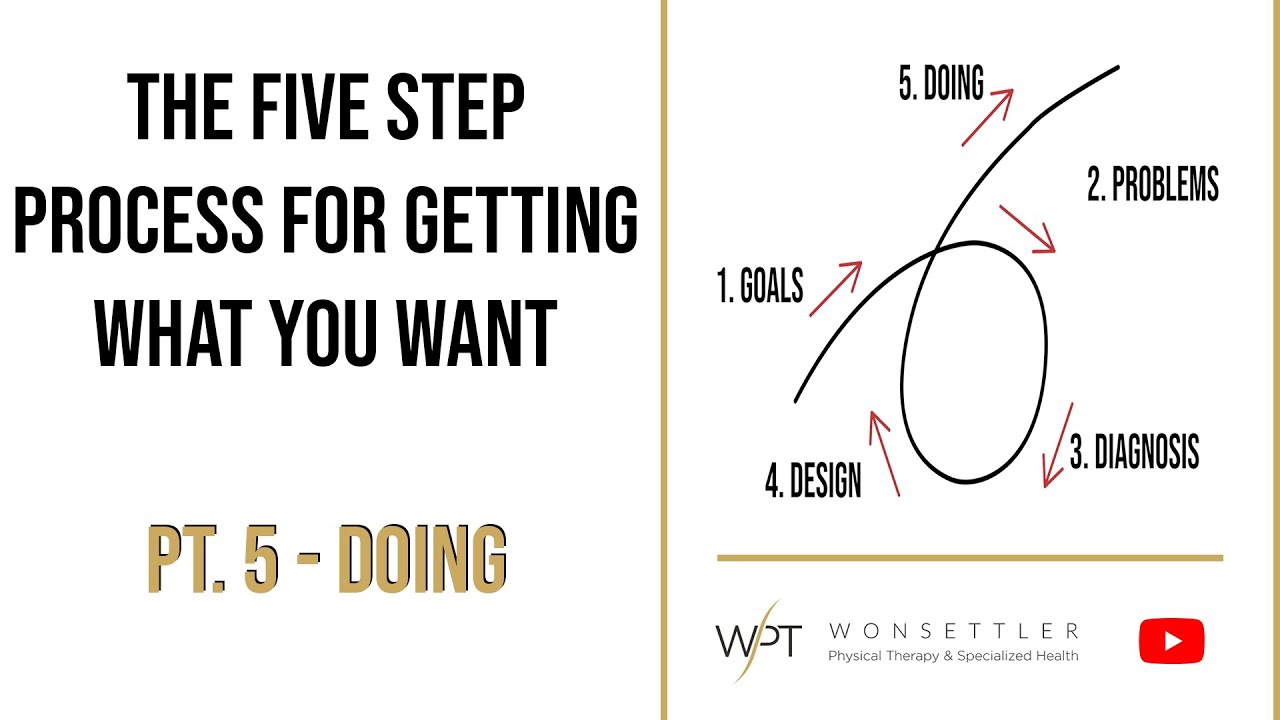
This step is probably the most straightforward step, as well as being quite possibly the hardest. On one hand, the hard work of figuring things out is done. It takes a lot of emotional fortitude to work through the first 4 steps. However, it takes the ultimate self discipline to do the work set before you. And keep doing it. Without quitting. Great planners who don’t execute their plans go nowhere.

This is all about habits. We all have habits, and we have a lot of them. Some of them serve us well, and help us move in the direction we want. Other habits are killing us, figuratively and sometimes even literally.

You almost certainly will not be able to do all of these 5 steps well. And that’s ok. Almost no one has the ability or aptitude to do all 5 of these things at a very high level. For example, goal setting requires higher level thinking skills like visualization and prioritization. Identifying and not tolerating problems requires you to be perceptive and good at information synthesis. Diagnosing well requires you to be logical and methodical. The doing part requires self discipline, a results oriented focus, and good work habits. I know I certainly don’t have all of these qualities in spades, and you probably don’t either. That’s ok! Weaknesses don’t matter if you find solutions and workarounds for them.

That’s a wrap for the 5 step process for getting what you want. We hope this has been helpful for you! We would love to interact with you about your journey with the 5 step process. Please like and subscribe – we would love to hear from you!

Staying in the Game

WPT presents Staying in the Game, a free injury prevention workshop for female athletes age 12-21. The goal of this workshop is to help educate female athletes on injury prevention within the lower extremity; Including the ankle, hip, and knee joints!

This workshop will review the basic anatomy of the lower extremities, the most common injuries that occur, and specific exercise programing to minimize the risk for injury. After an informative presentation, those in attendance will be placed into breakouts where they will be assessed on their deep squat, box jump, and Y-Balance test. These tests will give our PTs an opportunity to assess movement. For example, if a participant is doing the deep squat test and their knees are collapsing in, the PT will be able to provide cuing to correct this movement pattern as well as provide exercises to allow enhance strength into the deep squat position. At WPT we do not take a “one size fits all” approach and we want to bring the same philosophy to our workshops. We want to bring an Individualized understanding of participants’ unique movement patterns.

This clinic will give female athletes an understanding of how their movement is at baseline and steps they need to take to improve motor patterns. The workshop will also include topics like nutrition, mental health, sleep patterns, as well as managing training schedules throughout the year that will help prevent overtraining and burnout. Everything we will be talking about is based on solid research so you know you’ll be getting the best information possible.

This event will be held on Saturday, March 5th 2022 from 9:00am – 11:00pm. This event is totally free and we look forward to seeing everyone there!

Design Your Plan!

Designing a plan. This is the fourth step in Ray Dalio’s Five Step Plan for Getting What You Want. This step is crucial to the process because once we’ve identified our goals and road blocks, the next logical step is to design a plan that eliminates the problems in our way.

The first thing to be aware of is being able to look at your circumstance and problem from a higher level and recognize that the outcomes you achieve are outcomes produced by a machine or system. Look at everything that is happening in your life (as it relates to your goal) and identify the aspects of the machine that are not working properly.

The second element is that making a plan is a lot like writing a movie script in the sense that you need to understand who is going to do what at what specific intervals in time. Not only that, but you need to recognize that just like there are multiple actors in a movie, there are multiple players in your life that will help you implement the plan. For example, at WPT there have been instances where the knowledge needed for a specific plan or task went beyond the walls of the clinic. In those instances, hiring outside consultants that have a high degree of proficiency in an area where I am weak has helped overcome obstacles that stand in the way of our progress.

The third piece of a well thought out plan is that it’s written down and can be measured against. This includes all of the specific details about who needs to do what tasks and when. If we cannot measure against it, we won’t know how effective our design is and what elements should stay and which should go.

We’re excited to bring you the fifth and final step to getting what you want in the next video. Stay tuned!

Diagnose Properly to Get at the Root Causes

When you’re on the trajectory of working toward your goals, you’ll invariably come across problems that stand in the way of your getting what you want (this assumes your goals are appropriately audacious – if you’re not stretching yourself you very well may not “fail”).

First focus on “what is” before deciding “what to do about it”. After you encounter a problem, you will come across a common trap that can typically befall us humans – wanting to quickly move to a solution, rather than sitting with the problem and accurately diagnosing the root of the issue. This can be a big problem, because if you move quickly to a solution, you’re much more likely to keep bumping up against the same issue down the road.

Here’s the beauty of diagnosing well – you get to learn about what you and other people are like, that way you can know what to expect. The tough part about this is it can be very uncomfortable. We as humans don’t like to sit with all of our weaknesses and inadequacies, and we also do not like pointing out those things in other people. Part of the time it’s because we’re blind to our weaknesses, but it’s much more likely our egos get in the way.

According to Ray Dalio “More than anything else, what differentiates people who live up to their potential from those who don’t is their willingness to look at themselves and others objectively and understand the root causes standing in their way”.

Our next blog will focus on how to Design a Plan to overcome your problems and keep on ascending toward bigger and better goals!

Migraines 101

Have you had a migraine? Have you had a migraine with aura, like the one in the picture?

Watch this video to learn about headaches and migraines, so you can understand more deeply what’s going on and what you can do to positively influence them when they arise. Headaches and migraine are very common ailments, but not a lot of people are fully informed about them. So what is a headache? A headache is classified as any pain in the face, head or upper neck area.

The World Health Organization estimates 50-75% of adults 18-65 years old have had a headache in the past year and a headache that lasts 15 or more days every month affects 1.7-4% of the world’s population. 30% of these headaches are reported as migraines and migraines are the 5th most common cause for disability in adults under 50.

First let’s talk about the differences in various types of headaches.

Primary VS Secondary Headache

Primary Headache


  • Headaches that have no underlying cause


  • Migraines


  • Tension-Type Headache (TTH)


  • Trigeminal Autonomic Encephalalgia


  • Other primary HA


Secondary Headache


  • Result of another condition causing traction on or inflammation of pain-sensitive structures


  • Medication Overuse Headache (most common)


Migraines


  • Chronic and episodic neurovascular pain syndrome


  • Altered nervous system processing


  • Clinical picture is four phases:


  • Prodrome – This is when you have the sense that a migraine is coming


  • Aura – Altered visual field while experiencing a migraine


  • Headache Phase


  • Postdrome – This is the last stage of a migraine, often called a “migraine hangover”


  • Symptoms last 4-72 hours on average


  • Second most common primary HA


Migraine WITH Aura


  • This is a spreading of pain across the brain


  • Aura consists of fully reversible symptoms that precede or accompany HA


  • Commonly described as changes in visual field


  • Visual images fade typically as the HA begins


  • HA is intense, throbbing and usually on the opposite side of the visual field changes


Migraine WITHOUT Aura


  • Most common type of migraine seen in clinical practice


  • Usually unilateral and periorbital


  • Vomiting may occasionally terminate the headache


  • Various combinations of symptoms:


  • Fatigue


  • Difficulty concentrating


  • Neck stiffness


  • Blurred vision


  • Yawning


  • Pallor – Fading in color


Headaches are REMARKABLY complex and can be REMARKABLY debilitating. It can be very frustrating trying to discover what can be done to help ease your headaches. In the following video we are going to focus on things you can do proactively to decrease the frequency and intensity of your headaches.

Please feel free to reach out to us if you struggle with headaches and/or migraines, to find out how we can be a resource to you.

Identify Your Hurdles!

The second step of Ray Dalio’s 5 step process for getting what you want is identify and don’t tolerate the problems that stand in the way of your achieving those goals.

It can’t be said enough – this is REALLY hard! Being able to identify our own weaknesses and bring them to the surface. Weaknesses are not pleasant. They highlight areas within us that are uncomfortable at best, and at times can be downright painful.

But I think the most successful people see their weaknesses differently than the rest of us. They don’t respond with pain. They appreciate when they uncover a weakness that’s getting in the way of their goals, because it’s a necessary step. They change the paradigm, and therefore remove the pain that can get in the way of their progress. When the pain of our own weaknesses are removed, we’re more likely to confront them and design ways around them.

I also think it’s worthwhile to not jump ahead. Though this can sometimes be less fun, we should really not rush this step. You, like me, have more than one weakness, and more than one problem. If you rush too quickly, you may miss something that’s a bigger barrier than the first thing you’ve discovered. Take your time!

In our next blog we will be talking about the importance of accurately diagnosing problems to get at their root causes, stay tuned!

Overhead Athletes, This One is for You Pt. 2

In the last video we talked about the 4 most common adaptations that occur with overhead athletes. For a recap, here they are again. Excessive external rotation, decreased internal rotation, ER weakness and shoulder blade dysfunction. To see our last video, visit this link here

Today we’re going to give you a really abbreviated version of simple but very effective arm care routine you can perform if you play any overhead sport. These exercises are specifically designed to address the adaptations we’ve mentioned above.

Sleeper stretch: This stretch is to address limitations in internal rotation range of motion

External Rotation with a band: This exercise will help strengthen your shoulder in a way that is not likely getting strong in your training, unless you’re doing this or very similar exercise

W’s: This is a great exercise to improve the stability and function of your shoulder blade, which is really important for good shoulder mechanics.

Serratus push ups: Strengthening the Serratus Anterior muscle is really integral in providing shoulder stability for you overhead athletes.

Try these four exercises to assure you’re performing at your best, taking care of your shoulders, and staying away from physical therapists and orthopedic surgeons!

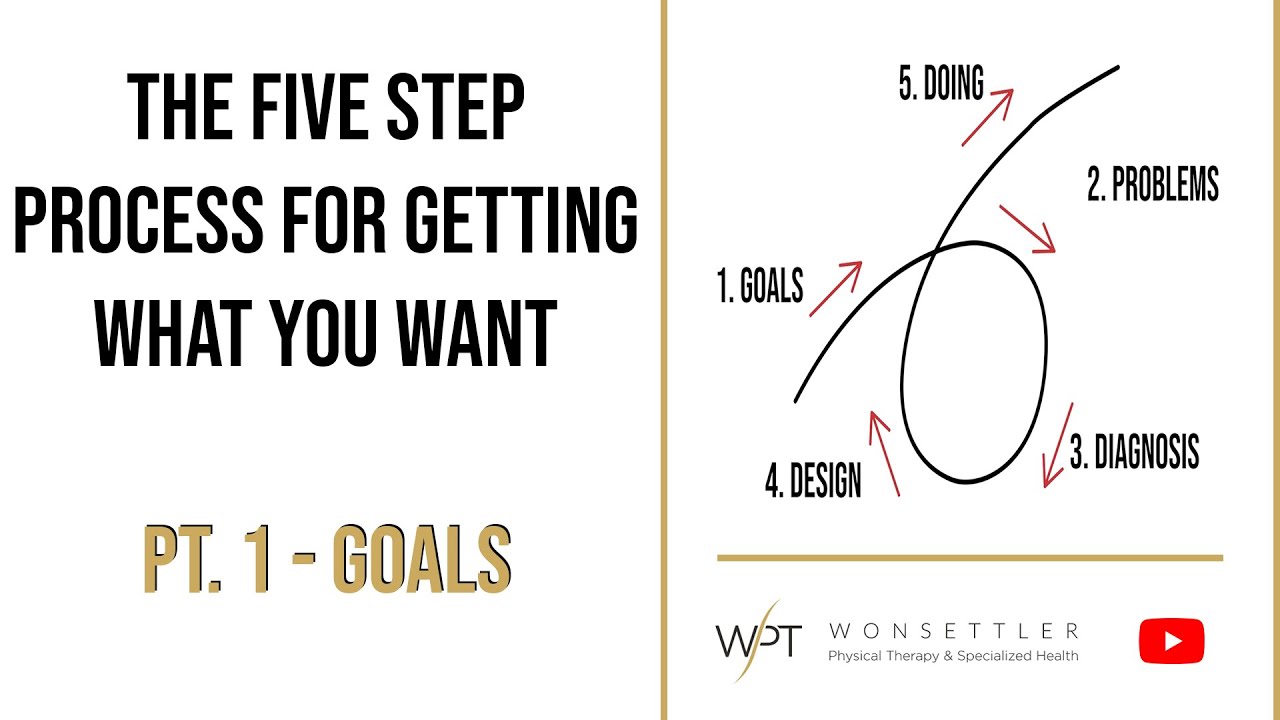
The 5 Step Process for Getting What You Want

1. Have clear goals.

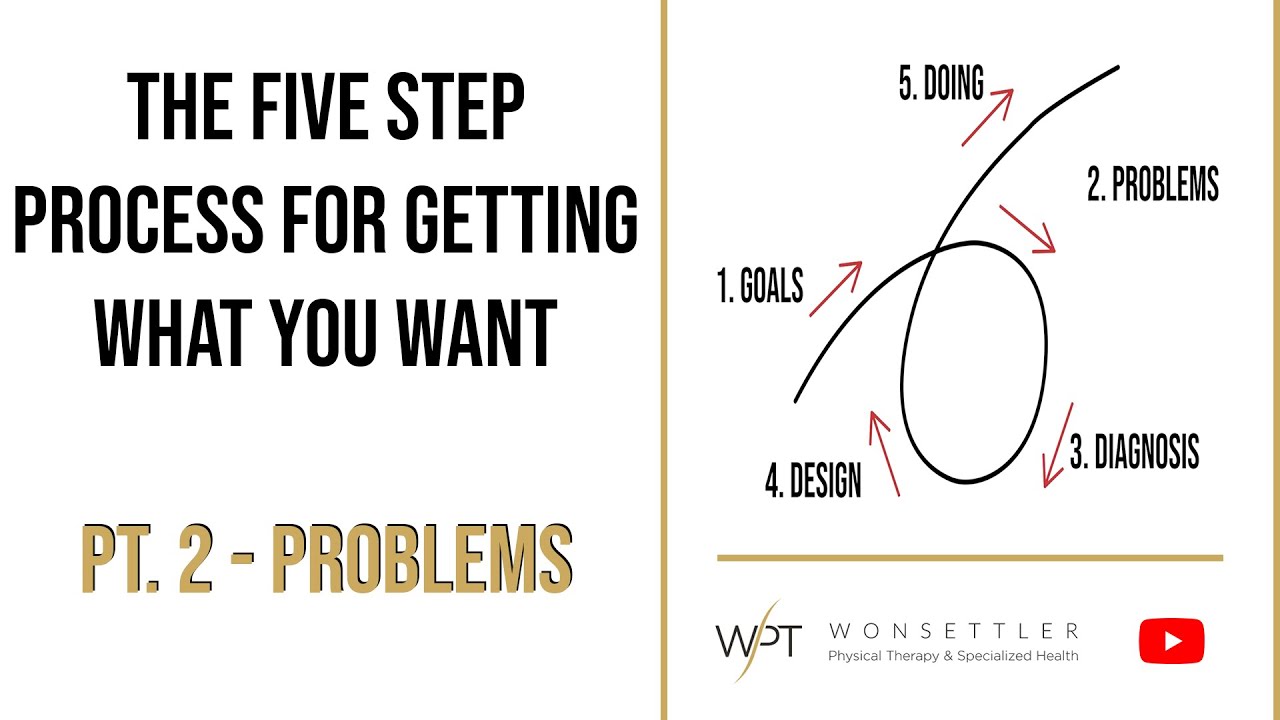
2. Identify and don’t tolerate the problems that stand in the way of your achieving those goals.

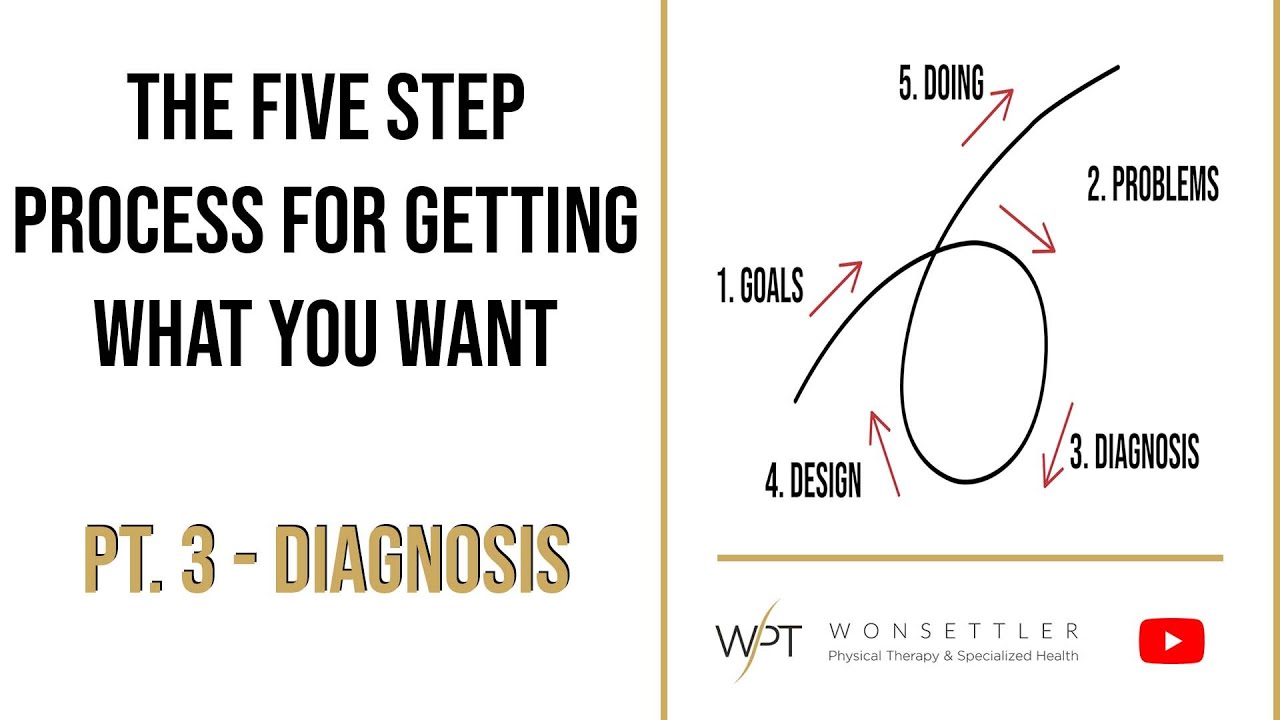
3. Accurately diagnose the problems to get at their root causes.

4. Design plans that will get you around them.

5. Do what’s necessary to push these designs through to results.

Today we’re going to discuss step 1. HAVE CLEAR GOALS. I can’t tell you how many people I’ve spoken to over the last few years that have very little clarity around what they want. You may not know this, before someone becomes a patient at WPT, I (Cliff) personally speak with them to learn about the backstory around their issues, what their barriers to recovery are, and ask them what they’re specifically wanting to achieve with Physical Therapy. I’ve heard from so many folks that say something like “I just want to feel better. I want to have less pain.” This is a great start. Of course no one wants to be in pain, or be limited by a physical issue they have. BUT, it’s often what is happening downstream as a result of that pain or issue that really affects someone’s life and has them seeking help.

What’s the thing you’re after? Get CRYSTAL CLEAR so you know how to aim, and you can be sure you’ll either hit the target and aim for the next thing, or re-adjust the scope learn from your misses so you can try again!

Overhead Athletes, This One is for You

If you’ve ever played a sport that involves significant time spent in the overhead position (baseball, basketball, swimming, tennis, volleyball, lacrosse, etc) you probably know very well that the repetition in these positions can cause issues that can lead to injuries. The facts are that repeated overhead stress and force cause microscopic trauma to the muscles and tendons.

This isn’t a bad thing, necessarily. Some of the adaptations that occur from repeated overhead exposure lead to increases in performance, and that’s what every overhead athlete is after! However, it’s important to be aware of this, and know the typical changes that are seen over time, so that prevention is the focus – not rehab after a significant injury or surgery.

Here are some of the most common adaptations.


  • External rotation weakness: Think about it. All overhead sports about propelling things FORWARD – not backward. Resistance backward would improve external rotation strength, but this is simply not how overhead sports work. So you lose the strength in this particular group of muscles because they’re not being properly strengthened and conditioned – if you’re not taking the necessary precautions.


  • Excessive external rotation range of motion. This is a byproduct of trying to generate a lot of force forward. And it’s not just pitchers that develop this excessive range. Again, this by itself is not a problem, it’s an evolution. However, if left unchecked, it’ll cause some down range issues.


  • Decreased internal rotation. The total arc of our shoulder ROM doesn’t increase. Something’s gotta give. Often it’s a decrease in internal rotation.


  • Dysfunctional motion of our shoulder blade. This is often overlooked. In an upcoming video we’re going to get into the specifics of this. And we’re going to talk about what can be done to address it, so you stay in the game and perform at your absolute highest level.


Stay tuned on some really important, and basic, exercises you can do to keep yourself out of PT and away from the surgeon’s hands!

WPT Principles 5 | Evolution = Looping

I want to introduce you to one of my very favorite books I’ve ever read. I’ve read it at least 4 times, and I regularly revisit it for pearls of wisdom on how to operate, both individually and personally. Unsurprisingly, it’s called PRINCIPLES. It’s written by Ray Dalio, who is an investor and a super smart dude that has approached his personal and professional life really intentionally so he can maximize it for what he wants to achieve.

“Evolution consists of adaptations/inventions that provide spurts of benefits that decline in value. That painful decline leads either to new adaptations and new inventions that bring new products, organizations and human capabilities to new and higher levels of development, or decline and death.”

Dalio goes on to say that perfection doesn’t exist; it is a goal that fuels a never ending process of adaptation. If something, or someone, was perfect, they wouldn’t be evolving. But we know that companies, countries and individuals are highly imperfect but capable of improving. So rather than hiding our mistakes, we’re much better off to discover our imperfections and deal with them. When we can do this well, we learn the valuable lessons that come from the mistakes, and we improve. If we don’t, we don’t grow. “Evolve or die”, as they say.

In the coming videos in this series, I’m going to outline the specific 5 step process Ray Dalio prescribes in order to evolve well. Again, this looping trend applies to you as an individual (and it applies to your mental/emotional state, as well as your physical state) – heck, it applies to nearly everything. We hope you find this useful.

Evolve and struggle well!

– Clifton Wonsettler, DPT, CSCS